Tag: james lankford
DHS Nominee Quizzed In Secret Session Over Bizarre 'Classified Mission' Claims

DHS Nominee Quizzed In Secret Session Over Bizarre 'Classified Mission' Claims

Nominated to serve as Secretary of Homeland Security, Sen. Markwayne Mullin (R-OK) was caught in a "discrepancy" in his biography on Wednesday, which left lawmakers scratching their heads during his confirmation hearing. The decision was ultimately to go to a classified setting, where Mullin said he could answer their questions about his "special assignment," which he told the Senate he couldn't talk about.

Mullin's tale dates back to the January 6 attack, when he told C-SPAN he was able to spring into action because “I’ve been in those situations before overseas." He claimed, “I recognized that there was an issue really quick.” When asked for specifics, he refused to go into it.More recently, Mullin described the “smell of war.”

“War is ugly, it smells bad, and if anybody’s ever been there and been able to smell the war that’s happened around you and taste it and fill it in your nostrils and hear it, it’s something that you’ll never forget, and it’s ugly,” he said.

Mullin has never been to war nor has he been in any kind of military service. He was a UFC wrestler. As The New Republic's Edith Olmsted noted Wednesday, his comments have raised questions about "stolen valor."

Mullin was forced into a secure setting where the senators could discuss classified matters about what he said was a secret. After leaving, Sen. James Lankford (R-OK), who nominated Mullin officially, said that what Mullin called "classified" was actually more of a nondisclosure agreement (NDA). Mullin was never recruited by any government agency for any overseas mission.

"There’s still a lot of unanswered questions about what 'special missions' Sen. Markwayne Mullin (R-OK) was engaged in such that he could not disclose to the committee in a public setting," wrote Politico's Homeland Security reporter Eric Bazail-Eimil. Lankford, he said, made it clear the issue is not classified.

"Democrats are confused," Bazail-Eimil said. "Sen. Richard Blumenthal (D-CT) said it was a 'weird' situation and said he has more questions."

"Lankford also told us the trip was related to a follow up on a whistleblower. But Mullin said earlier he received SERE training," wrote Courthouse News Congress reporter Benjamin S. Weiss. SERE stands for Survival, Evasion, Resistance, and Escape (SERE) training, according to the U.S. Air Force.

Weiss recalled that Mullin also told the Senators he would only talk to people in the classified setting with "top secret" or "SCI clearance." What he did, Lankford said, was under an NDA.

"Things look even less clear," Weiss assessed.Mullin backed himself into a corner once Sen. Gary Peters (D-MI) began questioning him on which agency classified his trips. Mullin answered that the House did, but the House doesn't have that power.

NBC News reporter Melanie Zanona reported that former Speaker Kevin McCarthy was in the hearing audience to support Mullin in his nomination.

She relayed that McCarthy said Mullin's claims about being approved to take a classified trip to an undisclosed location in 2016 as a House member are '100% true.'"

McCarthy further said he checked with then-Speaker Paul Ryan (R-WI) at the time and "former staff." Mullin testified that only four people in the House knew about the mystery mission.Weiss noted that after the classified questioning, Lankford tried to dismiss the matter about the SERE training as a “mountain and molehill” situation. When pressed on it, however, Lankford's account contradicted Mullins', and he refused to go into more details discussed in the classified setting.

“If you knew more of the story, which is small, in this point, then it would make more sense, on it," said Lankford, according to Weiss.

Politico legal reporter Kyle Cheney said that the discrepancy between top secret classified information and an NDA "makes a lot more sense, but raises the question of why Mullin kept describing it as some kind of classified venture."

"Whether Trump’s DHS pick gets confirmed before 3/31 could come down to whether Senate Homeland Security Chair Rand Paul (R-Ky.), who has a bone to pick with Mullin over comments Mullin made about the 2017 assault against Paul, will proceed with tomorrow’s markup as planned," wrote Bazail-Eimil on X.

The Washington Post reported ahead of the hearing that Mullin has been telling this story for at least five years. The story is one that "most laymen would assume meant he served in foreign battle," wrote the Post's congressional reporter Paul Kane.

David J. Bier, the Cato Institute's director of immigration studies, noted that while in her role, Secretary Kristi Noem's "biggest problems were that she and her staff were habitually dishonest, deceptive, and unaccountable. If you want to see how Sen. Mullin will be exactly the same, watch this 8-second exchange: Dishonest. Evasive. No accountability."

Reprinted with permission from Alternet
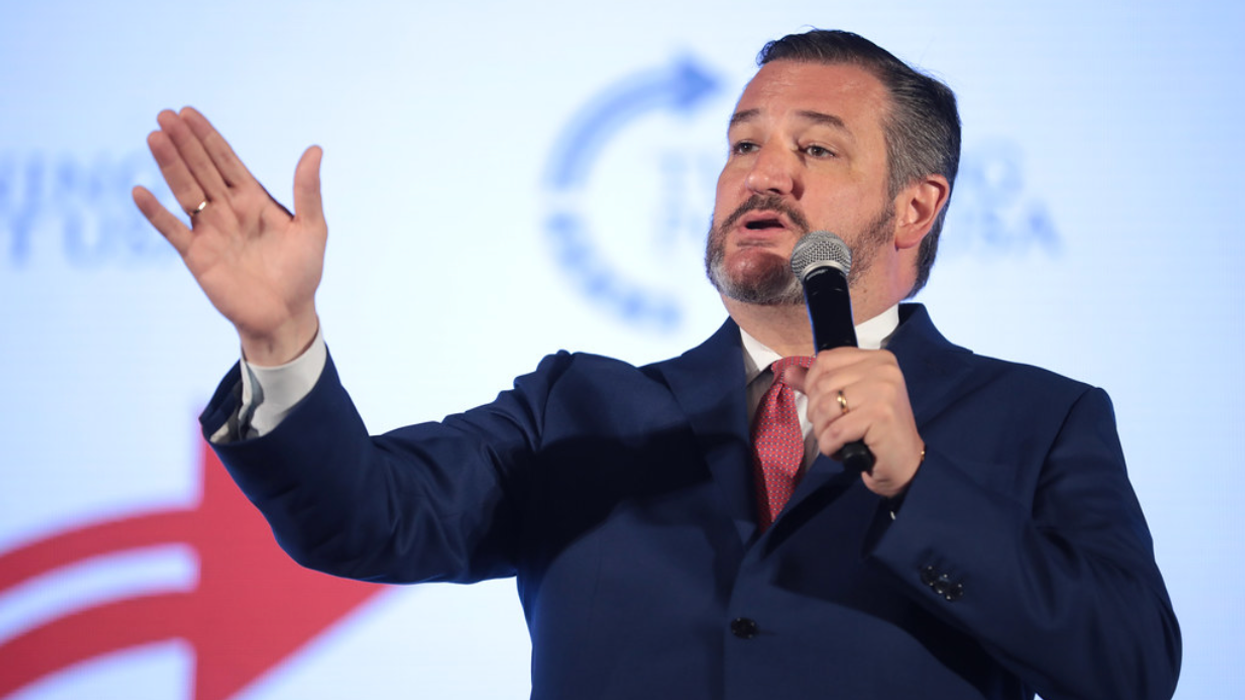
Sen. Marco Rubio

‘I Haven’t Even Read It’: GOP Senators Clueless On Jan 6 Commission Bill They Oppose

This week the House of Representatives passed a bipartisan bill by a vote of 252-175 to establish a commission on the January 6 assault on the U.S. Capitol Building. Rep. John Katko of New York, a conservative Republican, played a key role in crafting the bill, which was approved by all House Democrats and 35 Republicans.

But the bill now faces an uphill climb in the U.S. Senate, where Minority Leader Mitch McConnell has come out against it. And journalist Haley Byrd Wilt, in The Dispatch, reports that most Senate Republicans appear to be joining McConnell in that opposition.

Because of the rules of the filibuster, the bill will need at least 60 "yes" votes. Democrats have a majority in the Senate, but it's a narrow one. The bill needs ten or more Republican votes to become law.

Abolishing the filibuster would make it easier to get the bill through the Senate. But while Sen. Joe Manchin of West Virginia, the Senate's most conservative Democrat, is in favor of a January 6 commission, he is opposed to ending the filibuster.

As Wilt explains: "Most Senate Republicans are opposed to the House's proposed independent commission to look into the January 6 attack on the Capitol and the events leading up to it. They're just not exactly sure why."

She argued that nearly all of the arguments Republicans brought up in opposition to the committee are based on misperceptions about what the legislation actually entails:

The legislation the Senate will soon consider was negotiated by the top Democrat and top Republican on the House Homeland Security Committee. It's miles apart from Pelosi's first proposal. It follows closely in the footsteps of the 9/11 commission. Members would be limited to those who are not currently serving in government. The panel would be evenly divided and Democrats wouldn't be able to do much of anything without Republican support. The GOP appointees would have equal say in where the probe goes and who gets subpoenaed. These were the two main demands from Republicans, and Democrats agreed to them. It also has a December 31, 2021 deadline for a final report—ensuring it wouldn't drop in the thick of the 2022 midterm elections.
Rep. Don Bacon, one of the 35 House Republicans who bucked GOP leadership to support the commission, summarized it like this: He voted for the bill, he said, because Democrats "basically gave us what we wanted."

Ironically, some of the Republicans say they just want congressional committees to take the lead in investigating the events — even though those committees are much more unilaterally controlled by Democrats than the commission would be.

But mostly, based on the comments to The Dispatch, the Republicans in opposition just seem uninformed and uninterested in the details.

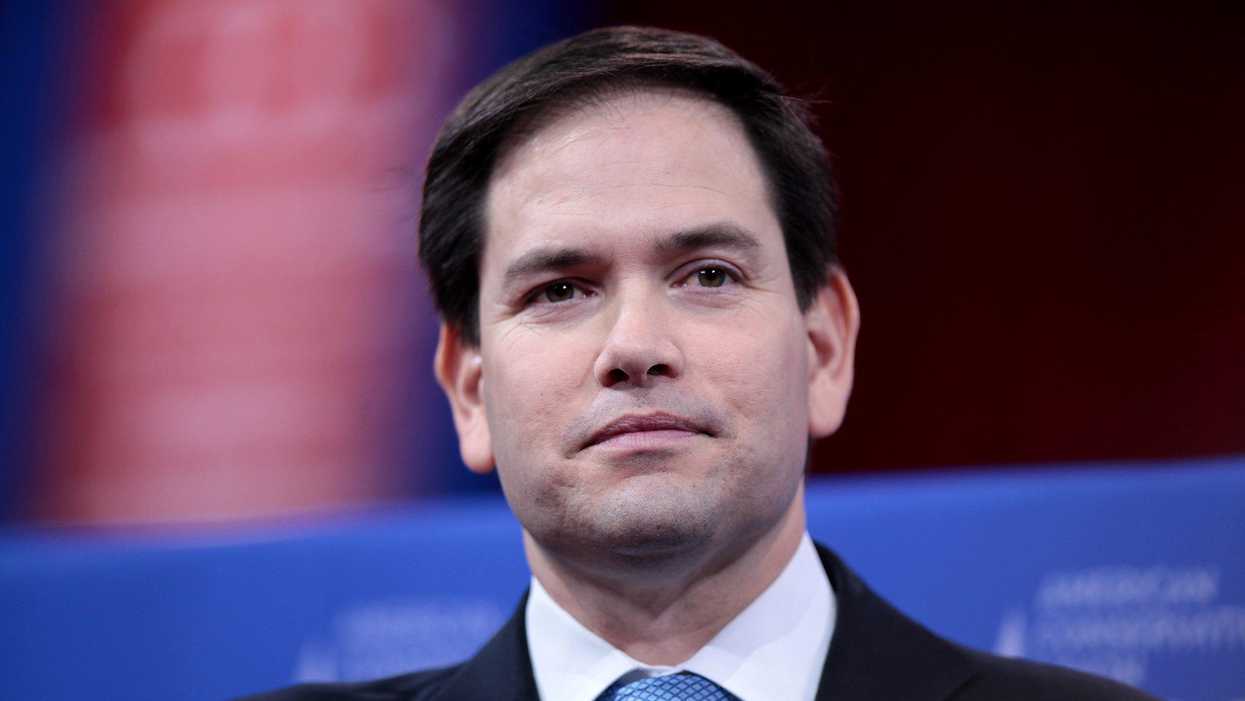
Sen. Marco Rubio (R_FL) told The Dispatch, "If you're going to turn a commission into a political partisan weapon — you know, use it to subpoena people to embarrass them, use it to want to make allegations that might prove useful in the 2022 elections — you're actually contributing to the problem. My general feeling is that if we can have a serious examination of the events leading up to, occurring, and in the aftermath of that day, we should do it."

Rubio also admitted of the legislation: "I haven't even read it," even though, as Wilt explained, it has been available since Friday, it could be easily outlined within minutes by a staffer, and has been the subject of debate for months.

Others didn't seem to get the point or the details of the legislation, either, even though previously many Republicans had endorsed the idea of the commission. The truth seems to be just that they don't want the evens to be a focus of public attention because they make the Republican Party look by. They're not interested in addressing the danger posed to American democracy.

Sen. James Lankford of Oklahoma told The Dispatch he won't support a bill if its purpose is to "just to go after President Trump." And Sen. Mike Rounds of South Dakota told The Dispatch that he hasn't ruled out the possibility of voting for the bill, but he didn't sound enthusiastic about it either.

Maine Sen. Susan Collins told The Dispatch she plans to discuss the details of the bill with Democrats but said, "The concept of a commission is a good one and would help answer some unanswered questions as well as give us some lessons learned."

According to Wilt, "There's not much that could change the minds of most GOP senators [about the bill]…. Democrats would need to win over at least 10 Senate Republicans to pass the commission into law. With unified opposition from Republican leaders on Capitol Hill and Trump threatening 'consequences' for those who break with the party line, that's looking unlikely."

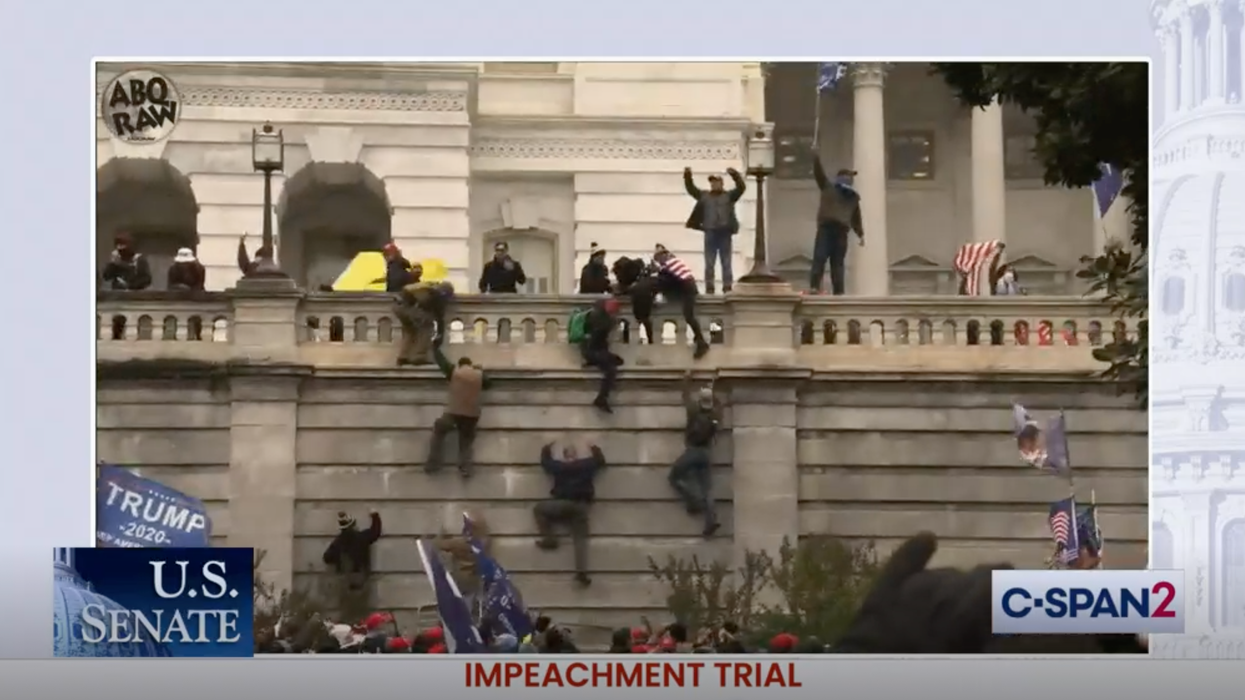
Video montage during Trump's impeachment trial

Some Republicans ‘Shaken’ By Horrific Riot Video — But Others Don’t Much Care

Reprinted with permission from Alternet
For those who found Tuesday's videos of the January 6 attack on the U.S. Capitol by Trump-incited insurrectionists disturbing or difficult to watch, many seem to be saying Wednesday's videos were even more difficult to watch.

The videos, never before seen security camera footage of the assault on the building and on hundreds of Capitol Police officers, show just how close the domestic terrorists came to coming in contact with the Vice President and the Speaker of the House – the second and third elected officials in line to the presidency – and Senate lawmakers.

Politico congressional reporter Andrew Desiderio says Senators Dick Durbin (D-IL) and Kirsten Gillibrand (D-NY) "looked away" during the footage of Metropolitan Police Officer Daniel Hodges being crushed by the insurrectionists.

But a few Republicans were also emotionally affected.

Sen. Lisa Murkowski (R-AK) told CNN's Manu Raju, "I don't see how Donald Trump could be re-elected to the presidency" after the videos were shown in the Senate trial, if Senators don't vote to bar him from running for office. She also told him "that the evidence that was presented thus far is pretty damning."

Desiderio also says Sen. James Lankford (R-OK) "was incredibly shaken up after that last video of Officer Hodges being crushed. I and other reporters in the chamber observed Lankford appearing to get teary-eyed. Sen. [Steve] Daines (R-MT) was comforting him and was holding his arm."

And one unnamed GOP Senator confessed they hope all Americans watched today's videos.

But not all Republicans were affected.

"I've got nothing for you now," Senator John Cornyn told CNN's Raju, who says the Texas Republican is usually very "talkative."

Senator Ron Johnson of Wisconsin appeared to be in total denial of Trump's complicity.

Senator Roy Blunt of Missouri, a Trump die-hard, was untouched.


As was Senator Mike Braun of Indiana – Mike Pence's home state:

It's hard to convict, Braun added, "When you think the process is flawed in the first place."

The Senate voted 55-45 that the process was not flawed, that the Senate had jurisdiction to try the case. Senators are jurors, and swear an oath to deliver "impartial justice." As a juror, Braun does not get to decide whether or not the "process is flawed," because the Senate said it was not.

Senator Rick Scott (R-FL) called Tuesday's proceedings a waste of time.

"This is a complete waste of time," Scott said, per NBC News. "It's not doing anything to help American families, it's not helping people get jobs, it's not helping get the vaccine out … it's vindictive."

Shop our Store

Headlines

Editor's Blog

Trending

World